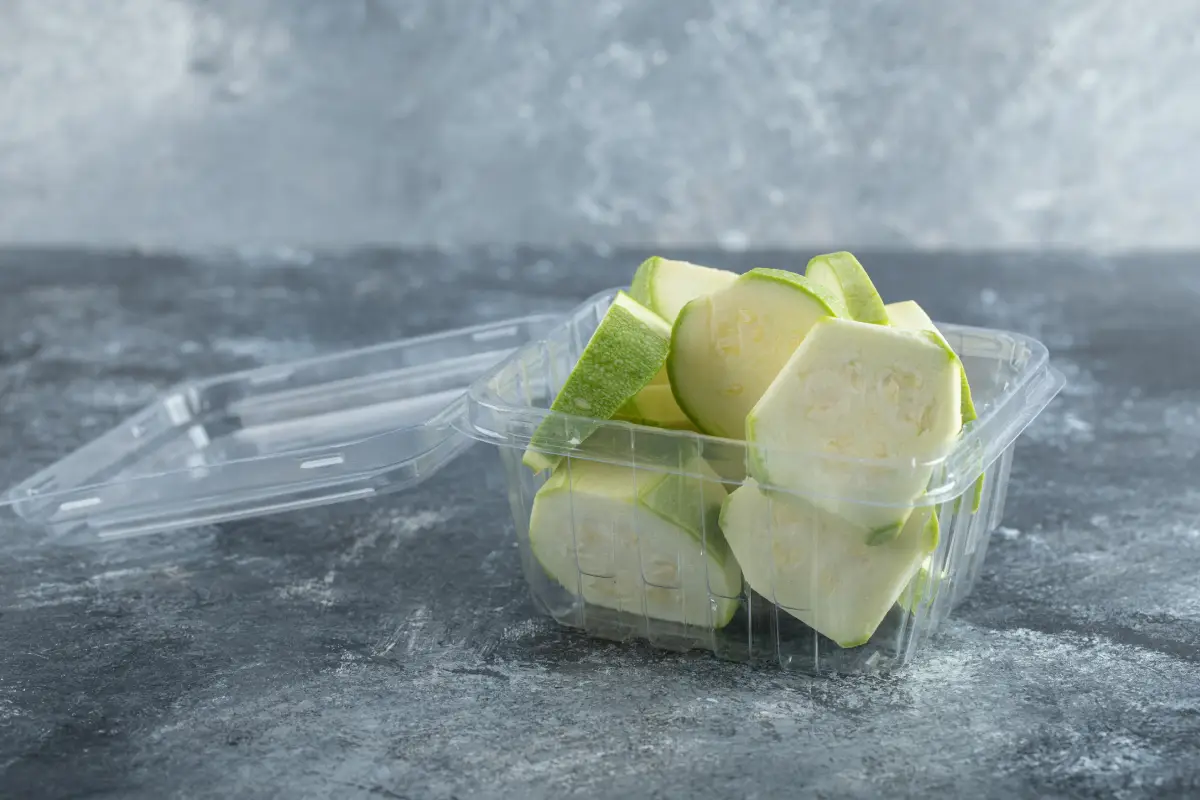
Plastic packaging for food products is of great importance for both manufacturers and consumers. While manufacturers use packaging to protect, keep fresh, and market their products, for consumers, this packaging is an indicator that the product is safe and healthy. So, how can you tell if a plastic food packaging is truly high quality? Here’s what you need to look for.
1. Material Quality and Type
The first indicator of quality packaging is the type of material used. Materials such as Polypropylene (PP), Polyethylene Terephthalate (PET), and High-Density Polyethylene (HDPE) are commonly preferred for food packaging. These plastic types are widely used for food contact and are compatible with recycling infrastructure in most markets. The packaging should bear the resin identification code (SPI Resin Identification Code) indicating the material type: for example, PET=1, HDPE=2, PP=5. Additionally, the “for food contact” symbol and usage pictograms (microwave, freezer, etc.) indicate its suitability.
Important nuance: A clear and transparent appearance alone does not prove quality. Quality assessment should consider measurable criteria such as optical (haze/transmittance), mechanical (impact/crack resistance, ESCR), thermal (softening/melting ranges), and chemical compliance (migration). If clarity is important, request haze (%) and light transmittance reports; adjust expectations for inherently translucent materials like HDPE.
2. Seal Integrity and Protective Properties
The primary purpose of packaging is to protect the food inside from external factors. High-quality plastic packaging prevents the food inside from being affected by air, moisture, and light. To verify this, do not rely on hand checks alone; review measurable test results and process parameters.
- Leak tests: Low-pressure leak, dye penetration, or vacuum tests.
- Seal performance: Seal strength values and sealing window in foil/film applications.
- Tamper-evident/tamper-resistant features: Builds trust in delivery scenarios.
- Perimeter seal solutions: Advantageous for liquid or semi-fluid contents.
Tip: Lid–container tolerances, gasket/click mechanism, and surface smoothness affect sealing. For liquids, perform bend/inversion and transport simulation tests.
3. Flexibility and Durability
Packaging that is too thin, bends easily, or tears is usually low quality. Aim for a balanced flexibility–stiffness profile and verify it with standard tests instead of subjective feel.
- Impact (drop) test: For example, 1 m drops with full/empty containers.
- Stack strength (top load): Resistance under shelving/transport loads.
- Hinge cycle test: Open–close cycles for hinged/latch lids.
- Nesting/denesting performance: Line speed and labor efficiency.
- TiHi & pallet efficiency: Layer pattern and case count influence cost and carbon footprint.
Note: Very hard/brittle items may crack at low temperatures; very soft structures may deform under stack weight. Include your use case (hot/cold, stack height, transport distance) in the test plan.
4. Odor and Taste Transfer
Low-quality plastic packaging can transfer odor or taste to food, especially with heat or prolonged contact. Confirm with documentation and testing rather than subjective smell.
- Overall/specific migration tests: Required for food-contact compliance.
- Sensory tests: Reports for odor/taste transfer under standard conditions.
- Temperature range and usage: Microwave/heat-lamp pictograms and recommended range should be specified. Anti-fog lids improve visibility in hot-serve applications; condensation management matters.
5. Brand and Manufacturer Information
A reliable manufacturer stands behind its packaging. Quality packs include manufacturer details and up-to-date certification language.
- Quality/Food Safety: ISO 9001, ISO 22000 / FSSC 22000, SQF, BRCGS Packaging Materials.
- Declaration of Conformity (DoC): References to EU 1935/2004, 2023/2006 (GMP), and 10/2011; current accredited test reports.
- Traceability & transparency: Product codes, lot tracking, clear material and usage info on the label.
Tip: Supplier portals should provide DoCs, test reports, update dates, and certificate validity periods.
Test Before You Start
Do not rely on catalog visuals alone. Request real samples and test in your operation: verify clarity under store lighting, stack in your display, and fill with different foods. Real-world testing prevents costly mistakes.
You can also perform a ship test: box the container and send it to a known address to observe transport behavior and resistance to movement. Conduct shelf-life and seal integrity checks: does the pack endure on-shelf and retain liquids? Performance matters as much as presentation.
Consider your use case carefully. If stacking in a deli counter, you need packaging that withstands weight. For sandwiches, condensation control may be necessary. List specific needs before deciding.
Methodical Pilot Recommendation
- Pilot use: 1–2 week real-product trial.
- Shelf/display simulation: Observe transparency/condensation under light/heat; assess anti-fog.
- Shipment simulation: Drop/stack tests in cartons; leak checks.
- Heat/cold: Validate microwave, heat-lamp, refrigerator/freezer suitability.
- Compatibility: Lid fit/torque; sealing window for film-seal applications.
- Logistics: Review TiHi, case, and pallet fill rates.
Conclusion
Judging plastic food packaging quality requires more than appearance. Material type, seal integrity, durability, and odor/taste neutrality determine protection and safety—and should be verified with documentation and testing, not subjective impressions. By applying these checks in your next purchase, you can better protect your product and make more informed decisions for your operation and customers.